
How to jump start a car – A dead battery is one of the most common automotive issues worldwide, yet many drivers still panic when their car refuses to start. Whether you are a new driver, a daily commuter, or someone who frequently travels long distances, understanding how to jump start a car is a fundamental skill that can save you time, money, and stress.
This comprehensive guide provides everything you need to know: the tools required, the step-by-step procedure, safety precautions, troubleshooting tips, and long-term battery care. By the end of this article, you will be able to perform a jump start confidently and handle battery-related issues like a seasoned driver.
Cars can fail to start for multiple reasons—cold weather, long periods of inactivity, faulty alternators, or simply an old battery reaching the end of its lifespan. No matter the cause, a dead battery often leaves drivers stranded at the most inconvenient times.
Knowing how to jump start a car ensures you can:
With increasing reliance on vehicles for daily activities, this knowledge is no longer optional—it is essential.
Before you jump start a car, you should confirm the battery is the actual problem. These signs usually indicate a weak or dead battery:
If you experience these symptoms, your battery likely needs a jump start.
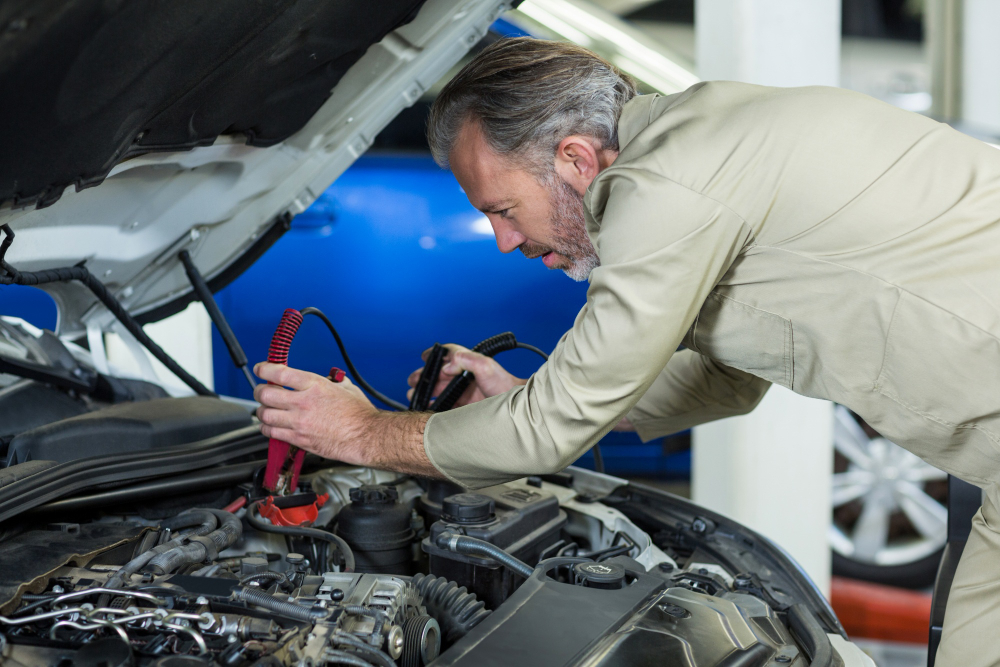
To safely perform a jump start, you will need one of the following:
A heavy-duty, well-insulated pair of jumper cables with strong clamps is the most common method. Avoid cheap, thin cables as they may fail to conduct enough current.
You can use either of the following:
Portable jump starters are becoming increasingly popular due to convenience—they allow you to start your car anytime without needing another vehicle.
Jump starting involves electricity, sparks, and sensitive car electronics. Following safety measures prevents damage and reduces risk of injury.
This is the most detailed, step-by-step guide for safely and correctly jump starting a car.
If using another vehicle:
If using a portable jump starter:
Open the car bonnet and find the battery. The terminals are usually marked:
Some modern cars hide their batteries under seats or panels; in these cases, use the designated jump-starting points indicated by the manufacturer.
This step must be followed exactly in sequence:
Avoid attaching the final black clamp to the negative terminal of the dead battery—this is a common mistake that may cause a battery explosion due to sparking.
Turn on the car with the good battery and let it idle for 1–3 minutes. This allows current to flow into the dead battery without overwhelming it.
If using a jump starter:
Try starting the dead car:
If the car still does not start after a few attempts, you may be facing issues other than a dead battery (discussed later).
Disconnect the cables carefully in this order:
Ensure the clamps do not touch each other while removing them.
After jump starting:
If the car dies again shortly after, it likely means your battery or alternator needs replacement.
Many drivers unknowingly damage their vehicles by rushing through the jump-start process. Here are the most frequent errors to avoid:
This can cause severe electrical damage or even a battery explosion.
This causes dangerous sparks and may short-circuit the system.
Cheap cables do not carry enough current, making jump starting difficult or impossible.
Some people believe revving helps; however, modern alternators already supply adequate power without revving.
Leaking batteries, cracked casings, or excessive corrosion require professional assistance—not a jump start.
Even after following the correct procedure, your car might still refuse to start. Here are possible causes:
Batteries older than 3–5 years may not hold a charge at all.
If the alternator cannot recharge the battery, the car will die shortly after starting.
A damaged starter will prevent ignition even with power.
Loose or corroded terminals prevent proper electrical flow.
Modern vehicles have complex electronics that may prevent a successful jump start.
If you face any of these issues, you will need a professional mechanic to diagnose the problem.
You can significantly reduce battery problems with simple maintenance habits:
Short trips or long periods of inactivity drain batteries.
Dirt and corrosion block electrical flow.
Battery lights may warn you before complete failure.
A mechanic can test voltage, cold-cranking amps (CCA), and overall condition.
Depending on usage and climate, most batteries require replacement within this period.
Advantages:
Advantages:
Disadvantages:
Whenever possible, keep a portable jump starter in your car for maximum safety.
Even if you successfully jump start your car, you should seek a mechanic if you notice:
These are signs of deeper mechanical issues.
Learning how to jump start a car is not only convenient but also empowering. It ensures you are never completely stranded due to a simple battery issue. With the right tools, proper knowledge, and safety precautions, anyone can perform a safe and successful jump start.
After a jump start, or if you are unsure about your vehicle’s true condition, getting a comprehensive inspection is the safest way forward. This is where Carpenia becomes your trusted automotive partner.
Carpenia provides:
If you plan to buy a used car, need a professional diagnosis after a jump start, or simply want peace of mind about your vehicle’s condition, Carpenia.com offers the accurate, trustworthy data you need.
Carpenia ensures you make informed, confident decisions—whether you are dealing with a battery issue, inspecting a used car, or verifying a vehicle’s background.