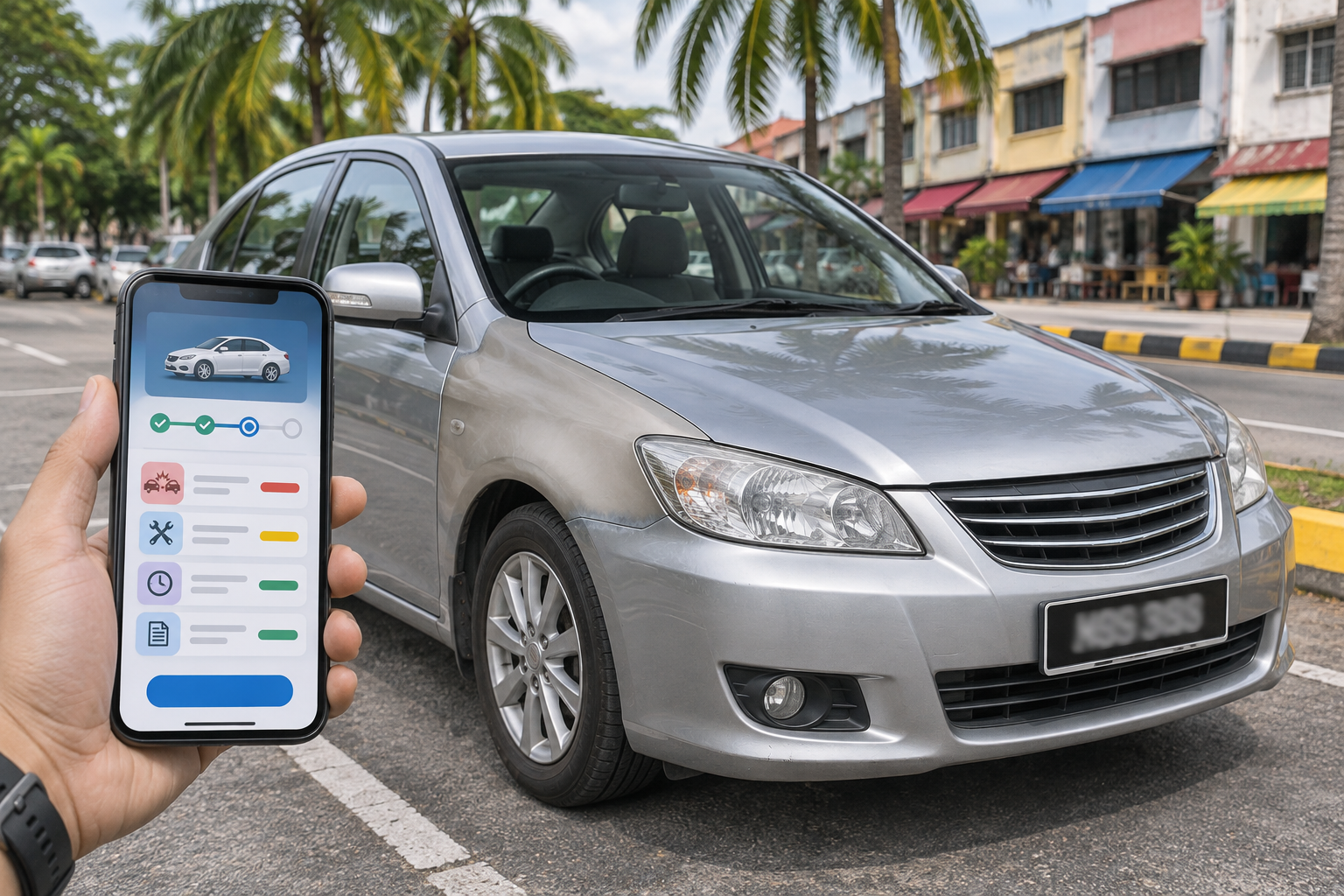

Check car accident history Malaysia before you sign any paperwork or hand over a deposit. That single step can save you money, time, and the stress of buying a damaged vehicle that later needs expensive repairs.
In this guide I cover practical steps and reliable sources you can use right now. You will learn how to collect the vehicle details, where to look for official and third-party records, how to interpret results, and what red flags to watch for when you Check car accident history Malaysia.
Used vehicle markets in Malaysia are active and competitive. Sellers may not always disclose previous accidents, and private sellers can omit key facts to secure a sale. By checking the vehicle history, you reduce the risk of purchasing a car with structural damage, flood history, or tampered mileage.
Knowing the accident history also helps you negotiate the asking price fairly. If a report shows a major repair or multiple claims, you can request a lower price or decide to walk away. In short, checking history protects both your pocket and your safety.
Start with the vehicle identification details: registration number, chassis/IC number (VIN), and engine number. These identifiers let you match the car to official records. Without accurate IDs, any search can return incomplete or incorrect information.
Next, use a combination of official resources and reputable private services. Official sources like JPJ and insurance databases provide some data, but they often lack a consolidated accident history. Third-party services aggregate records from insurers, workshops, and government registries to give a clearer picture.
Before you Check car accident history Malaysia, collect these details in person or ask the seller for verified documentation:
Ensure the chassis and engine numbers match those on the registration card (geran) and the car’s stamped plates. Discrepancies could be a sign of tampering or plate swapping. Take photos of the VIN plate and the registration card for your records.
Where possible, get the car’s service book and receipts for major repairs. These documents often show whether a car sustained structural work after an accident.
Start by searching government sources. In Malaysia, the Road Transport Department (JPJ) holds registration and ownership records. JPJ can confirm ownership status, outstanding summons, and taxation details. However, JPJ does not provide a complete accident history.
Next, ask about police reports. If a serious road accident was reported, the Royal Malaysia Police (PDRM) may have a record. Access typically requires a formal request and proof of lawful interest, so this route is better for buyers who suspect fraud or serious undisclosed claims.
Use the official checks to confirm: the car is not stolen, the registration is genuine, and there are no legal encumbrances. These checks don’t replace a full accident history report but are essential first steps.
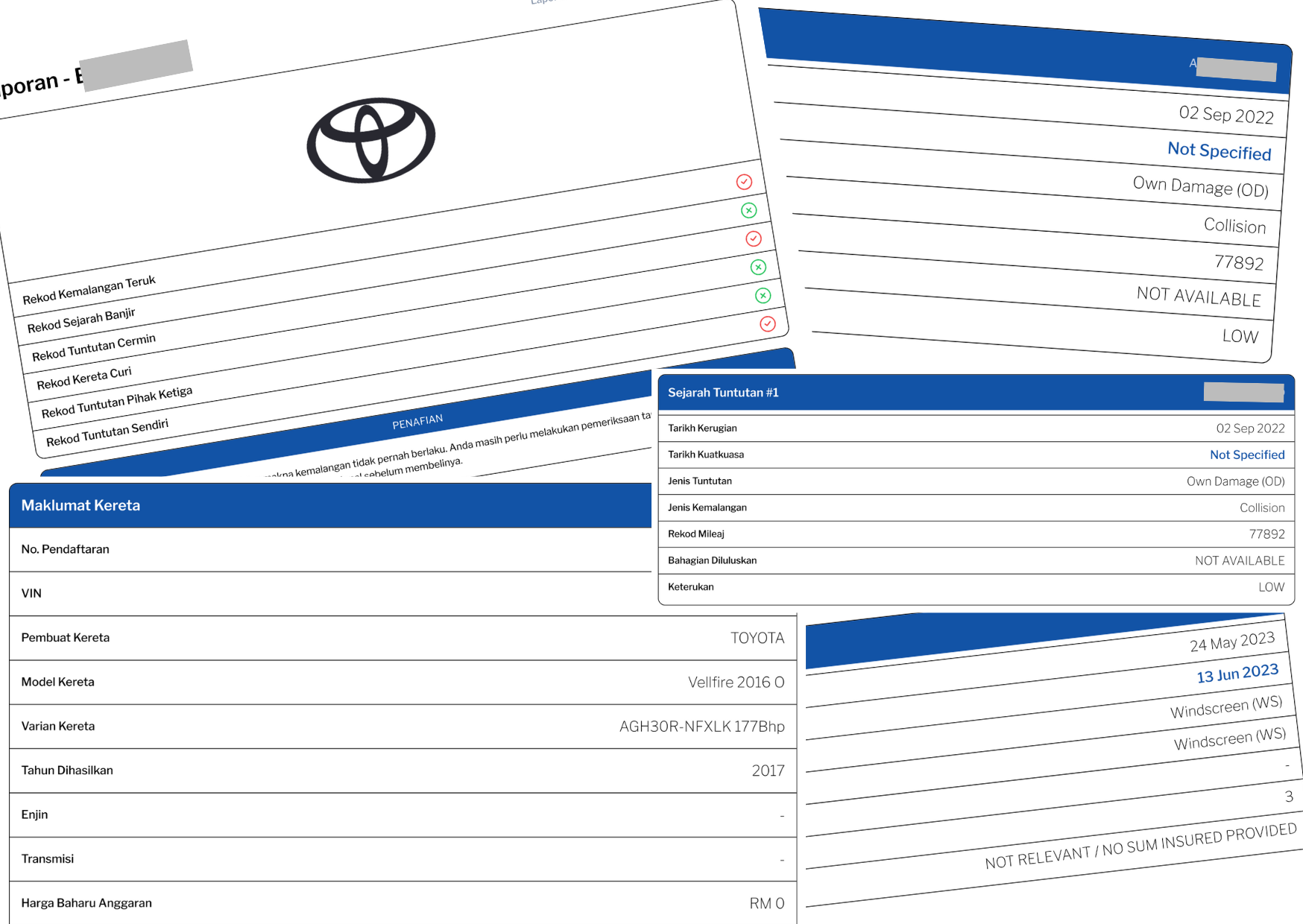
Third-party providers collect data from insurers, workshops, auctions, and government feeds to build a detailed vehicle history. These reports often show insurance claims, accident records, and prior ownership changes. For buyers in Malaysia, several services exist, including Carpenia, which offers consolidated reports tailored for local vehicles.
When you choose a provider, compare what each report includes. Useful items to look for are:
Pay for a report if it gives you clear documentation of past claims. A small fee is worthwhile when it prevents a costly mistake. Many services allow you to search by plate or VIN, so use both identifiers to increase accuracy.
Even with a solid report, always do a physical inspection or hire a professional inspector. Reports can miss recent accidents that were not claimed through insurance. On-site checks reveal signs of repair, paint overspray, mismatched panels, or inconsistent gaps between body panels.
During the inspection, pay attention to:
Also test drive the car. Listen for unusual noises, feel for pulling to one side, and check suspension responsiveness. These tests can reveal structural or alignment issues not visible on paper.
Certain signs should immediately raise concern. If a vehicle shows multiple insurance claims within a short period, that indicates repeated damage. Flood history is another critical red flag since water damage can cause long-term electrical and mechanical issues.
Other red flags include:
If you find any of these, either ask for a price reduction based on verifiable repair costs, request a professional structural inspection, or walk away entirely. Remember: a cheap car can become expensive quickly if hidden damage exists.
Cross-check all information. Match details in the third-party report to receipts, workshop invoices, and the seller’s claims. If the report lists an accident on a certain date, ask the seller to explain what happened. Honest sellers will provide documentation or a clear history.
Contact previous service centers listed in service records to verify mileage and work done. Also, check online vehicle marketplaces to see past listings for the same car. Multiple listings with different descriptions can signal misrepresentation.
Once you have a clear history, use it to negotiate. If the report confirms a major claim, get a repair estimate from an independent workshop and use that figure to adjust your offer. Be polite but firm: a transparent buyer-seller exchange benefits both parties.
When buying from a dealer, ask for a warranty or a certified inspection. Dealers that stand behind their vehicles often provide some protection. For private sales, insist on a proper bill of sale and confirm the transfer of ownership at JPJ promptly.
Finally, take time to review insurance options. If the car has previous claims, insurers may charge higher premiums. Factor that into the total cost of ownership before you commit.
Checking a car’s accident history is a clear, manageable process when you follow these steps: gather accurate vehicle details, consult official records, obtain a trusted third-party report, inspect the car physically, and verify any claims before negotiating. This approach helps you avoid fraud and hidden problems while giving you confidence in your purchase.
Remember to use multiple information sources and keep records of everything you find. Reports from services like Carpenia can consolidate claims and give you a comprehensive view that JPJ or a single insurer may not show. That extra layer of information often pays for itself by preventing costly mistakes.
Buying a Used Car? Check Its History First!
Don’t take unnecessary risks when buying a used car. Get a Car History Report from Carpenia to check available accident claims, insurance claims, mileage records, and other important vehicle history information.
Make a more informed decision before you buy.